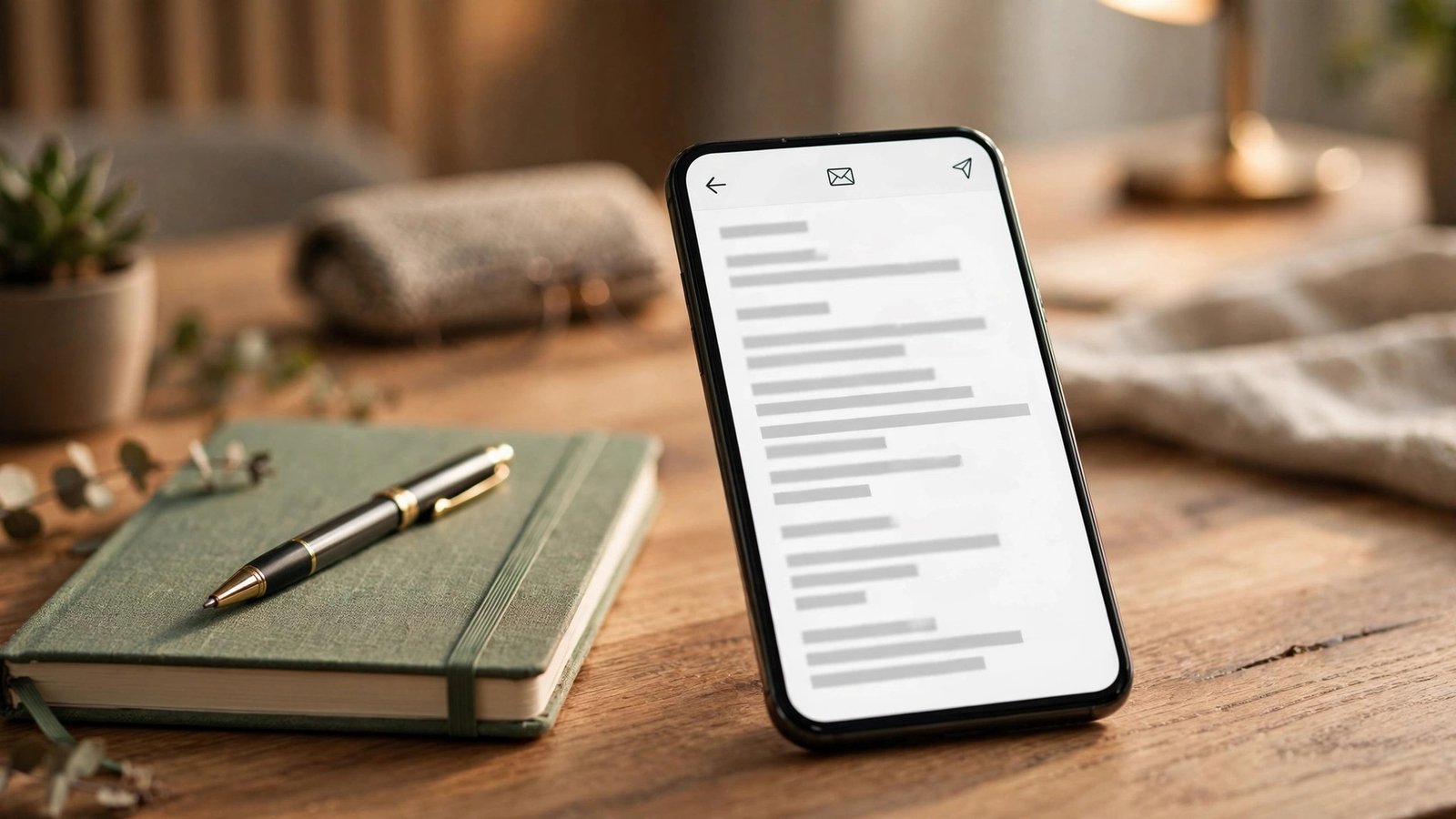
Most candidates walk out of an interview and do nothing. Smart candidates send a thank-you email within 24 hours — a small gesture that keeps you fresh in the interviewer's mind and reinforces your interest. This thank you email after interview sample guide gives you four templates and the rules for getting it right.
Why Thank-You Emails Matter
- They show professionalism: Few candidates bother, so yours stands out.
- They reinforce fit: You can briefly reconnect your strengths to the role.
- They fix mistakes: Forgot to mention something important? Add it here naturally.
- They keep you memorable: Interviewers see many candidates; a polite follow-up keeps your name familiar.
When to Send It
- Timing: Within 24 hours of the interview — the same evening is ideal.
- Not too fast: Don't send it from the parking lot. Wait at least 2–3 hours so it doesn't look rushed.
- Business hours: If the interview was late in the day, sending the next morning is fine.
- One email only: Thank once. Don't follow up again for at least a week.
Thank You Email After Interview Sample 1: Standard
Subject: Thank You — [Job Title] Interview
Dear [Interviewer's Name],
Thank you for taking the time to meet with me today regarding the [Job Title] position. I enjoyed learning more about the role and [Company Name]'s approach to [mention something specific discussed].
Our conversation confirmed my enthusiasm for this opportunity. I am confident that my [mention 1–2 relevant skills] would allow me to contribute effectively to your team.
Please let me know if you need any further information. I look forward to hearing from you.
Best regards,
[Your Name]
[Phone Number]
Thank You Email After Interview Sample 2: Teaching Position
Subject: Thank You — Mathematics Teacher Interview
Dear Principal [Name],
Thank you for interviewing me today for the Mathematics Teacher position. I particularly enjoyed discussing your school's focus on concept-based learning, which closely matches my own teaching philosophy.
I am excited about the possibility of contributing to your students' board results, and I would welcome the opportunity to demonstrate my teaching in a demo lesson.
Thank you again for your time and consideration.
Respectfully,
[Your Name]
[Phone Number]
Thank You Email After Interview Sample 3: After a Panel Interview
Subject: Thank You — [Job Title] Panel Interview
Dear [Names / "Interview Panel"],
Thank you all for the insightful panel discussion today about the [Job Title] role. I appreciated hearing different perspectives on the team's goals and challenges.
One point I would like to add: when you asked about [topic], I mentioned [brief point] — I have since reflected and wanted to share that in my previous role I [one-line example proving the point].
I remain very enthusiastic about this opportunity and hope to hear from you soon.
Kind regards,
[Your Name]
[Phone Number]
Thank You Email After Interview Sample 4: Short Version
Subject: Thank you for today's interview
Dear [Name],
Thank you for meeting with me today. I enjoyed our conversation and am excited about the [Job Title] opportunity at [Company Name].
I believe my experience in [key skill] would be a strong fit, and I look forward to the next steps.
Best regards,
[Your Name]
What to Include (and What to Skip)
Include:
- The interviewer's name (spell it correctly — check their email or business card).
- The exact job title.
- One specific detail from the conversation (shows you listened).
- A brief reinforcement of your fit.
Skip:
- Asking about salary or benefits — too early; it looks presumptuous.
- Desperation: "I really really need this job" undermines you.
- New information dumps: One added point is fine; a second CV is not.
- Generic flattery: "Your company is amazing" with no specifics sounds hollow.
Thank-You Email Mistakes to Avoid
- Typos in the interviewer's name — the single worst mistake in a thank-you email.
- Copy-pasting the same email to multiple interviewers without personalising — if they compare notes, you look lazy.
- Being too casual: No "Hey", no emojis, no slang.
- Writing an essay: Keep it under 150 words. Short and warm beats long and forgettable.
- Forgetting the subject line: A clear subject ensures it gets opened.
Frequently Asked Questions
What if I interviewed with multiple people?
Send a personalised email to each interviewer — or at minimum to the hiring manager and HR contact. Never send one generic email CC'd to everyone; it looks lazy. Vary one or two lines per person based on what each discussed with you.
Is a thank-you email necessary for walk-in interviews?
It's harder (you often don't have email addresses), but if you got a business card or the HR email, send one. In walk-in scenarios it stands out even more because almost nobody does it.
Should I connect on LinkedIn instead?
Email first — it's more professional and expected. A LinkedIn connection request a few days later is a fine supplement, with a short note: "It was great meeting you during the interview for [role]."
What if the interview went badly?
Send the thank-you anyway. A gracious email after a weak interview occasionally salvages the impression — and costs you nothing. Keep it brief and positive.
What If You Don't Have the Interviewer's Email?
- Ask the receptionist or HR contact who scheduled the interview.
- Check the company's website or LinkedIn page for the naming pattern.
- As a last resort, send it to the general HR email with the interviewer's name in the subject.
After the Thank-You: Following Up
If you haven't heard back within the timeframe they mentioned (usually one to two weeks), send one polite follow-up. For detailed guidance, read our article on how to follow up after an interview.
A thoughtful thank you email after interview sample takes five minutes to personalise and send — but it can be the detail that separates you from an equally qualified candidate. Don't skip it.
Real Example: Before and After
Weak version: "Thanks for the interview today. Hope to hear from you soon." — Generic, forgettable, adds nothing.
Strong version: "Thank you for discussing the Office Assistant role with me today. Your point about the team handling both front-desk and documentation work confirmed this is exactly the kind of varied role I thrive in — in my current position I manage both daily, and I'd love to bring that experience to your office. I look forward to hearing about the next steps."
The difference: specifics. Reference the actual conversation, reconnect your experience, and sound like a person — not a template.
Key Takeaways
- Send your thank-you email within 24 hours — the same evening is ideal, but wait at least 2–3 hours after the interview.
- Personalise every email: correct name spelling, the exact job title, and one specific detail from your conversation.
- Keep it under 150 words — short and warm beats long and forgettable.
- Use it to reinforce one strength or add one point you forgot — not to dump new information.
- One thank-you email only; follow up on the hiring decision after a week, not before.
- Save your sent email — if you interview at the same company again, you'll know exactly what you wrote.
- Proofread the interviewer's name twice — misspelling it undoes all the goodwill the email creates.
- Send from the same email address you used for your application, so the thread stays connected.


Comments (0)
Leave a Comment